Radar Vector
Can Machine Discover?
Can Machines Discover?
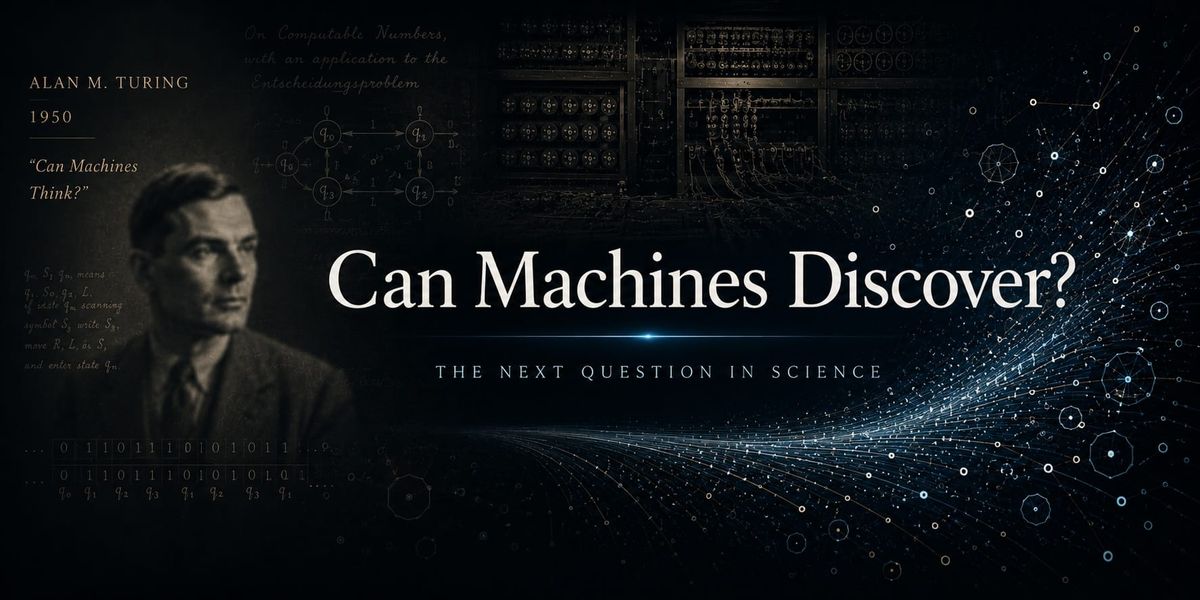
Discovery Engine — Post #1 The Question In 1950, Alan Turing asked whether machines could think (Turing, 1950). That question gave artificial intelligence a direction, a test, and a destiny — and defined the field for the seven decades that followed. It was not answered by argument. It was answered — or rather,
 Hiroaki Kitano
Human Cognitive and Behavioral Limitations in Scientific Discovery
The second essay in the Discovery Engine series. The first essay in this series asked whether machines can discover. Before that question can be answered, a prior one must be faced honestly: how good, really, is human-led discovery? This essay gives an account — structural, not personal — of where the
 Hiroaki Kitano
Connecting Distant Dots
The third essay in the Discovery Engine series. Discovery often comes from connecting distant dots — observations, concepts, and fields that no one had thought to join. This essay looks closely at three such connections — Darwin, CRISPR, and iPS — and asks how each was actually made, and whether a differently built
 Hiroaki Kitano
The Architecture behind the Discovery Engine
The Architecture Behind The Discovery Engine
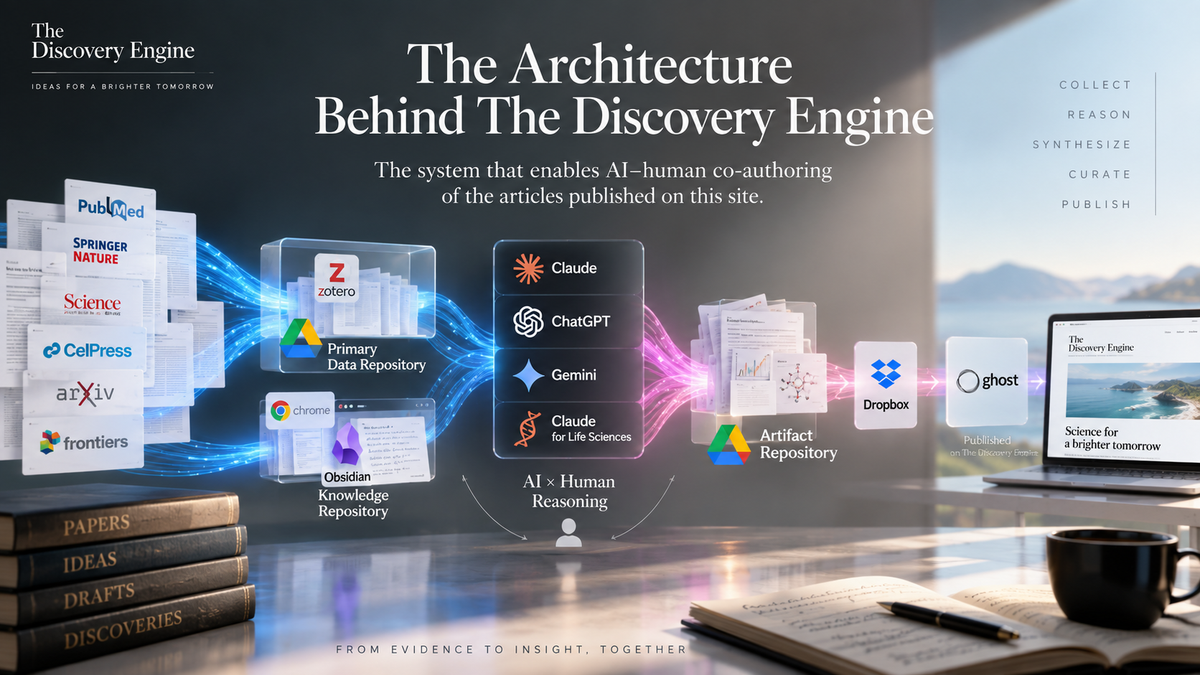
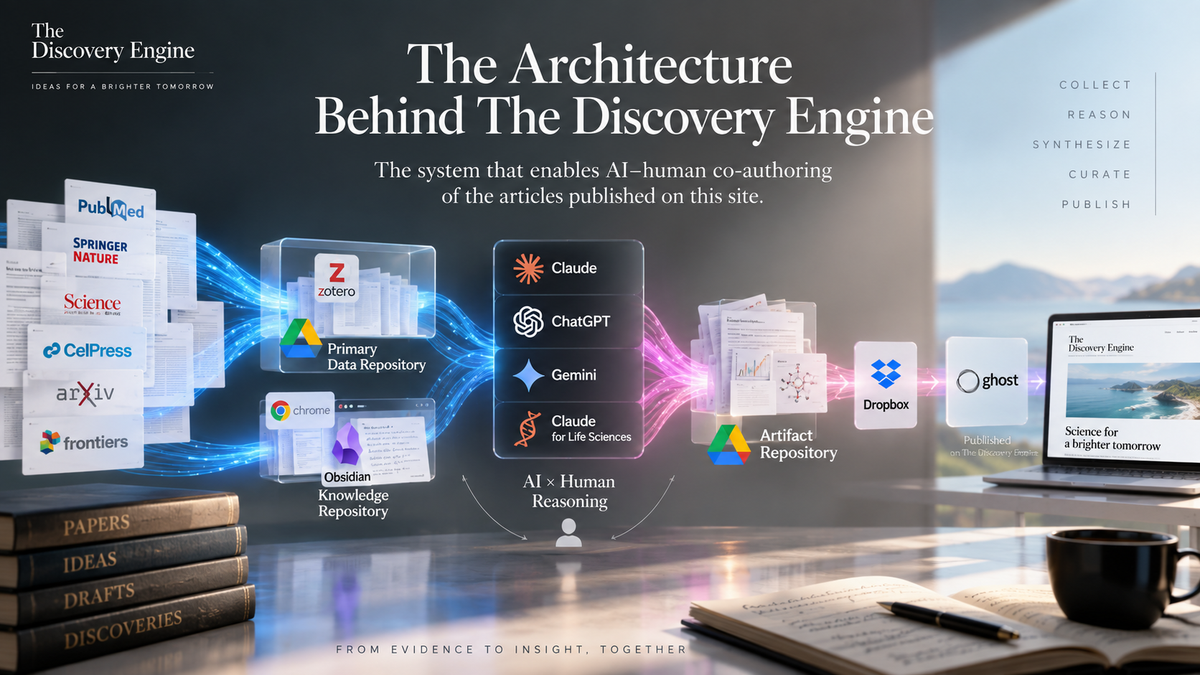
The system that enables AI–human co-authoring of the articles published on this site. Every article on this site is written by a human and several AI systems working together. This diagram shows how. Which models are involved matters far less than it seems. What actually decides whether the
 Hiroaki Kitano
The Discovery Engine を支えるアーキテクチャ
本サイトの記事を、人間とAIが共同で執筆するためのシステム。 本サイトの記事はすべて、一人の人間と複数のAIシステムが協働して執筆しています。その仕組みを示したのが、この図です。 どのモデルを使うかは、一般に思われているほど重要ではありません。成果が十分な検証に耐えられるかどうかを左右するのは、文章や図などの素材がシステム内をどう流れるかです。どこから入り、何が何を変更でき、誰が判断を下し、完成した記事がどこに届くのか。この図は、そうした流れを描いています。共同執筆という特定の目的のために設計され、最終段階でも、すべての主張をその根拠となる証拠までたどれるアーキテクチャです。 本格的な科学研究に用いる Discovery Engine には、さらに幅広い機能が必要です。その一部は、今後、本サイトで公開するかもしれません。どのような機能が必要になるかは、本稿の最後で述べます。 図1 The Discovery Engine を支えるアーキテクチャ。本サイトで公開する記事はすべて、図に示したワークフローで制作しています。図は2026年9月時点の構成を示したもので、今後も
 Hiroaki Kitano